
The Risk of Creosote
Creosote is a normal byproduct of fires that can easily be controlled and lessen the effects. However, despite being a normal byproduct, it can get out of hand and pose risks for homeowners. Let’s take a closer look at some of these risks.
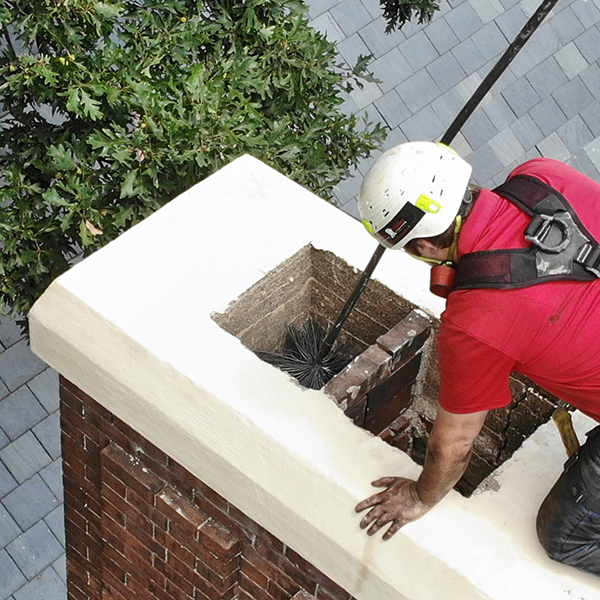
What is Creosote?
Creosote is an inevitable byproduct of burning wood, accumulating as a tar-like substance on inner chimney walls. While its formation is inevitable, proactive measures can mitigate its adverse effects. The National Fire Protection Association (NFPA) recommends annual chimney cleanings to manage creosote buildup, which can emit strong odors and release toxic chemicals when inhaled. As a homeowner, it is important to stay on top of creosote and general maintenance of your chimney.
Concerns with Creosote
Cleanliness
Creosote build-up hardens over time, making removal increasingly difficult. Severe accumulation may even necessitate replacing the chimney liner instead of just cleaning. Regular inspections by chimney professionals can help determine the appropriate cleaning level, ranging from moderate to severe. Depending on your situation, our chimney professionals will make sure to choose the correct approach to ensure you’re back on your way to normal fires as soon as possible.
Health & Safety
Creosote poses significant health risks. Inhalation of its fumes can irritate the skin, eyes, and respiratory system, worsening conditions like asthma and increasing cancer risks for the lungs and skin. Additionally, creosote is highly flammable, making it a leading cause of house fires. Even extreme heat can ignite large accumulations, causing fires to spread rapidly.
Preventing Creosote Buildup
- Enhance and Clear Ventilation: Airflow plays a big role in creosote forming on the inner walls by maintaining higher flue temperatures and preventing condensation.
- Burn Proper Wood: Use seasoned, dry hardwoods instead of green or improperly stored wood. Wet woods produce more creosote due to high moisture content and leads to quicker build-up of the tar-like consistency.
- Regular Maintenance: Schedule annual cleanings and inspections by certified chimney professionals to remove build-up and detect structural issues early.
Health Risks
Continued exposure to fumes that come along with creosote can lead to chronic discomfort or illnesses such as bronchitis, asthma, and lung damage. It is also designated as a potential human carcinogen by the International Agency for Research on Cancer (IARC), with links to cancers of the respiratory tract, skin, and other organs.
How to Tackle Creosote
To address creosote effectively:
- Schedule your annual chimney inspection and cleaning
- Avoid burning green, unseasoned, or wet wood
- Check for signs of build-up and call your local professionals if needed

Taking these precautions encourages safety, reduces health risks, and prevents costly repairs or fire hazards.
Ready to Tackle Creosote at Your Home?
If you’re in need of any chimney or fireplace assistance, the team at Dubuque Fireplace & Patio can assist with install, maintenance, and repair. No job is too small or large for us to provide expert assistance. Our team will provide outstanding support every step of the way. If you’re ready to install or in need of a cleaning, reach out to our team today.